Fafrees F20 vs Fafrees F28
We compare the Fafrees F20 and the Fafrees F28 across every dimension that matters - our scores, the key specs, and how each performs on the things you will actually notice day to day.
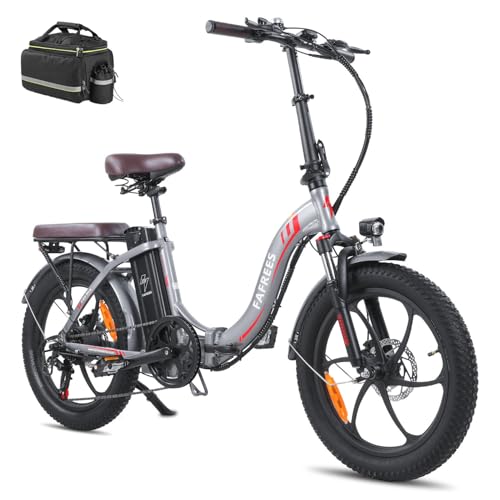
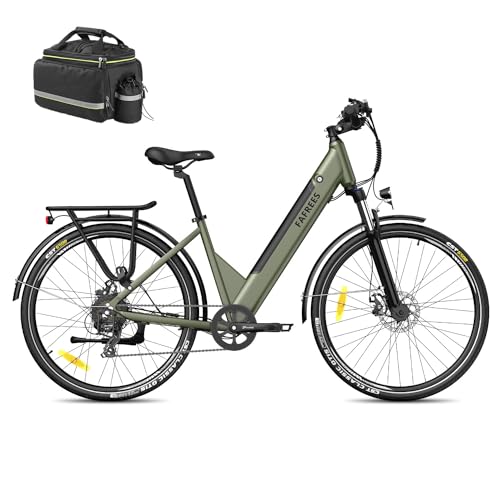
At a glance
| Fafrees F20 | Fafrees F28 | |
|---|---|---|
| Our score | 9.2/10 | 7.8/10 |
| Best for | Commuters and flat-dwellers who need to fold and store the bike | Everyday riding and commuting |
| Not ideal for | Riders wanting a premium-brand bike or shop servicing | Riders wanting a premium-brand bike or shop servicing |
| Brand | Fafrees | Fafrees |
Motor and Power
Fafrees F20
Power on this electric bike comes from a rear-wheel 250W high-speed brushless motor paired with a 36V battery system. The manufacturer claims a maximum torque of 40N·m and a maximum speed of 25km/h when using the motor-assisted setup. The rear drive layout is described as easier to handle and better at traction, which can help on mixed surfaces during commuting. The controller limits assist to the stated UK-legal 25km/h motor-assisted cap, so acceleration feels steady rather than instant. When riders switch between power and pedal assist, response changes as expected.
Fafrees F28
Motor power is central to this electric bike's day-to-day performance, because it uses a rear-hub 250W brushless motor designed for UK road-legal pedal assist. Rated output supports up to 25km/h, with maximum torque of 45 Nm and peak output reported as up to double the rated power. It should feel responsive on flat starts, and the manufacturer claims enough slope-climbing ability for most urban roads. For buyers comparing fafrees F28 vs, the motor is aligned with a commute-focused brief, although real hill performance will still depend on rider weight and cadence.
Battery and Range
Fafrees F20
Battery and range matter because the Fafrees uses a 36V battery system to power its rear 250W brushless motor, so real-world distance depends on how the rider uses electric power compared with pedal assist. It has a removable 648Wh battery, which the manufacturer links to up to 43 to 56 miles in electric mode, or 75 to 93 miles with pedal assist. Higher levels of assist, faster speeds and more stops reduce range, while steadier pedalling helps. For shoppers comparing The electric bike options, the Fafrees price should be weighed against these mode-based limits.
Fafrees F28
Battery and range matter for how long the Fafrees can handle daily commutes without needing a charge. This model uses a 522Wh battery rated at 36V. The manufacturer states it can reach up to 100 miles, depending on riding conditions. For planning with the electric bike, riders should expect shorter trips on hills, strong headwinds, and higher assist use, because power draws change. Charging needs also vary by how often the rider uses electric mode versus PAS mode. For practical use, range should be estimated from past rides, then a buffer should be built in for return trips.
Ride, Gears and Hills
Fafrees F20
For hilly routes and mixed surfaces, the electric bike's ride setup is supported by its 7-speed gearing and rear-drive motor torque, helping riders maintain control as the road steepens. The Fafrees F20 Pro review notes that the rear-drive motor sits at the back, which can feel steadier on uneven ground, while handling stays predictable. Shifting through seven speeds supports different effort levels when climbing. With up to 40N.M torque and a maximum assist speed of 25 km/h, steeper sections are easier to pace, although unspecified hill lengths may still require pedalling. The Fafrees pros and cons also reflect the balance between gearing control and its 25.5 kg weight.
Fafrees F28
Riders will notice how the Fafrees handles hills and day-to-day riding depends heavily on its 7-speed drivetrain and the way its assist modes are used. The 250W rear-hub motor, paired with 45N.M torque, supports steady slope climbing on typical urban routes, especially when PAS mode is selected early. Shifting stays smooth, because the 7-speed shifter derailleur provides accurate gear steps. On steeper grades, lower gears help cadence while the motor maintains pull. This combination is part of the fafrees f28 pros and cons, since manual shifting may be needed more often. Some shoppers may target the fafrees f28 best price uk.
Brakes and Safety
Fafrees F20
With safety in mind, the electric bike uses dual mechanical disc brakes with front and rear rotors to improve stopping control on wet or uneven surfaces. The brake levers are power-offer, so braking can cut assistance when needed. The 160mm disc size suggests strong bite for daily commuting, but mechanical systems still need routine cable and pad checks. Riders should test braking before busy rides, then confirm lever feel is consistent in all weather. For 7-speed use, smooth shifting helps avoid sudden pedal load changes that can affect braking stability.
Fafrees F28
Stopping power on the electric bike is provided by front and rear mechanical 160mm disc brakes. This matters for day-to-day commuting, especially on hilly routes where extra speed can build between junctions. Power-offer brake levers are designed to reduce stopping distance, and the 7-speed drivetrain helps riders manage speed before braking. Braking should be tested in a safe area, and harsh stops should be avoided in wet weather to help preserve grip. In the UK, electric bikes are only road-legal under the EAPC rules if they meet the 250W limit, and the speed at which motor assistance cuts out remains within the EAPC threshold.
Build and Frame
Fafrees F20
The Fafrees uses a folding frame designed to make storage and transport easier once the bike is collapsed for carrying or for use in small spaces. It is presented as a best folding electric bike, using a sturdy layout that supports 7-speed shifting and disc braking, with a 25.5 kg weight that affects carry lifts. The frame incorporates a 36V system powered by a removable 648 Wh battery. A rear 250W motor drives the build, prioritising balanced traction, but the folding hinges mean a careful setup check may be useful before rides.
Fafrees F28
On the Fafrees F28 Pro (2025), the build prioritises commuter-friendly geometry and practical comfort features rather than lightweight performance. The seatpost provides 24.7 cm of travel, paired with a front suspension fork offering 80 mm travel and a lockout. Rolling on 27.5-inch wheels with CST slim city tyres, it is set up for everyday grip, and the disc-brake layout supports predictable stopping. The frame choice suits frequent city riding, but stability relies on correct setup. When comparing the Fafrees price with the best folding electric bike options, the commuter-first geometry is the main trade-off.
Folding and Portability
Fafrees F20
Folding and portability matter on the electric bike because the frame is designed to collapse for carrying or storage in smaller spaces, rather than staying rigid like a standard commuter bike. In day-to-day use, the folding design helps when parking indoors, using lifts, or loading into a car boot. At 25.5 kilograms, though, it still requires two hands for safer handling, especially after folding. The 648 Wh removable battery supports practical transport since it can be removed separately. Buyers comparing this electric bike best price UK to listings on The Fafrees should factor in this folding convenience, while also planning for the bike's weight.
Fafrees F28
Folding and portability on the electric bike (2025) are best understood as commuter-focused convenience. With a 24.7 kg build, it is still likely to be awkward for stairs, but the folding design is intended to help it fit into tighter storage spaces. When unfolded, the 27.5-inch wheels and the commuter-oriented setup support predictable handling for an electric bike for adults, which is a practical priority for daily use. For people comparing the best budget electric bike options, the main trade-off is managing the weight versus keeping the bike portable enough for apartments and trains, where folding can make a difference, provided it is handled carefully.
Who Is This Electric Bike For?
Fafrees F20
This electric bike is aimed at riders who need an e-bike that can handle varied city routes and rougher terrain, while still being practical to store or move when space is limited. It suits electric bike for adults who commute on changing surfaces, because the 250W rear-drive motor and fat tyres are built for stability. It also suits riders considering the Fafrees F20 Pro for longer day trips, since the 648Wh battery is rated for up to 43-56 miles in electric mode, or 75-93 miles with pedal assist. At 25.5kg, it folds for transport, but carrying it still takes effort.
Fafrees F28
The Fafrees positions the F28 Pro (2025) as a commuter e-bike designed for pedal assist within UK 250W EAPC limits, while still providing everyday comfort features. It suits daily travel in towns and suburbs, with a quiet rear-hub motor and responsive control. The 27.5-inch wheels, 80mm front suspension with lockout, and 7-speed gears support mixed roads, from smoother cycle paths to rougher streets. The 522Wh battery is rated for rides up to about 100 miles, making it suitable for longer commutes. For riders looking for the best fafrees electric bike or the best electric bike uk, it also fits riders who encounter typical urban hills.
Fafrees F20: pros
- 250W motor
- Range up to 150 miles
- Removable-style 36V 18Ah battery
- Disc brakes
- Folds for storage and transport
Cons
- Heavier than a non-assisted bike, so lifting and storage need thought
Fafrees F28: pros
- 250W motor
- Range up to 100 miles
- Removable-style 522Wh battery (36V)
- Disc brakes
- 7-speed gears
Cons
- Heavier than a non-assisted bike, so lifting and storage need thought
Our verdict
Our pick is the Fafrees F20 (our score 9.2/10) - A practical electric bike with 250W motor and range up to 150 miles, best matched to your terrain and how far you ride. The Fafrees F28 is still worth it if it is cheaper when you check, or if it better matches your specific needs.