Engwe L20 vs Fafrees F20
We compare the Engwe L20 and the Fafrees F20 across every dimension that matters - our scores, the key specs, and how each performs on the things you will actually notice day to day.
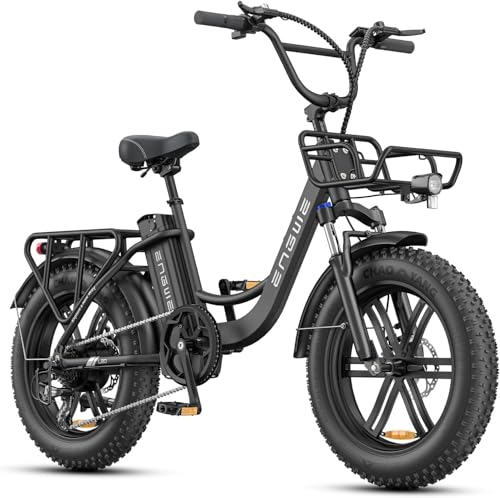
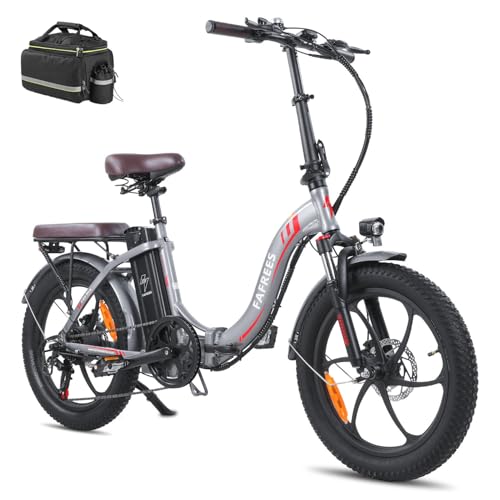
At a glance
| Engwe L20 | Fafrees F20 | |
|---|---|---|
| Our score | 8.5/10 | 9.2/10 |
| Best for | Commuters and flat-dwellers who need to fold and store the bike | Commuters and flat-dwellers who need to fold and store the bike |
| Not ideal for | Riders wanting a premium-brand bike or shop servicing | Riders wanting a premium-brand bike or shop servicing |
| Brand | ENGWE | Fafrees |
Motor and Power
Engwe L20
Motor and power on the ENGWE L20 (V3 2.0) are set up for UK road-legal pedal assist, using a 48V 13Ah battery paired with a 250W motor. The motor output stays within the UK 250W EAPC limit when used as pedal assist. Riders get a BOOST function for extra power during inclines or faster acceleration. Control is designed around twist-grip plus a force measurement sensor, which adjusts assistance to pedalling effort. That can feel smooth for commuting, though it depends on consistent pedalling input.
Fafrees F20
Power on this electric bike comes from a rear-wheel 250W high-speed brushless motor paired with a 36V battery system. The manufacturer claims a maximum torque of 40N·m and a maximum speed of 25km/h when using the motor-assisted setup. The rear drive layout is described as easier to handle and better at traction, which can help on mixed surfaces during commuting. The controller limits assist to the stated UK-legal 25km/h motor-assisted cap, so acceleration feels steady rather than instant. When riders switch between power and pedal assist, response changes as expected.
Battery and Range
Engwe L20
With a 48V 13Ah battery, this electric bike (V3 2.0) is designed for everyday rides and longer outings, and its manufacturer-stated range is up to 120 km (also described elsewhere as up to 126 km). The actual distance will vary with rider weight, speed, and how often assistance is used. The battery fully charges in about 6.5 hours, which suits commuters planning an overnight top-up. This battery and range profile is relevant to the ENGWE decision, particularly for how buyers compare The electric bike price expectations.
Fafrees F20
Battery and range matter because the Fafrees uses a 36V battery system to power its rear 250W brushless motor, so real-world distance depends on how the rider uses electric power compared with pedal assist. It has a removable 648Wh battery, which the manufacturer links to up to 43 to 56 miles in electric mode, or 75 to 93 miles with pedal assist. Higher levels of assist, faster speeds and more stops reduce range, while steadier pedalling helps. For shoppers comparing The electric bike options, the Fafrees price should be weighed against these mode-based limits.
Ride, Gears and Hills
Engwe L20
The ENGWE (V3 2.0) is set up for mixed rides, where hills require manageable speed on flatter sections. The 7-speed gears make hill work more controlled, because lower gears reduce effort while higher gears help on straight sections. Compared with other setups, the key difference is how the gearing and the 48V 250W motor work together, including a BOOST function for steeper inclines or quicker starts. The 20 x 4.0 inch tyres provide traction on gravel and light forest paths, though very steep climbs still depend on rider fitness.
Fafrees F20
For hilly routes and mixed surfaces, the electric bike's ride setup is supported by its 7-speed gearing and rear-drive motor torque, helping riders maintain control as the road steepens. The Fafrees F20 Pro review notes that the rear-drive motor sits at the back, which can feel steadier on uneven ground, while handling stays predictable. Shifting through seven speeds supports different effort levels when climbing. With up to 40N.M torque and a maximum assist speed of 25 km/h, steeper sections are easier to pace, although unspecified hill lengths may still require pedalling. The Fafrees pros and cons also reflect the balance between gearing control and its 25.5 kg weight.
Brakes and Safety
Engwe L20
Braking confidence matters on the electric bike (V3 2.0), because the bike is designed for both city riding and rougher surfaces. It uses mechanical suspension for comfort. For safety, test braking before busy commutes, and check that the folding joint area stays secure during riding and stopping. In the UK, "are electric bikes legal uk" depends on meeting EAPC rules, with a motor up to 250W and assistance cutting off at 15.5mph (25km/h). This model fits the 250W limit, but brake feel still matters when choosing the "best electric bike uk".
Fafrees F20
With safety in mind, the electric bike uses dual mechanical disc brakes with front and rear rotors to improve stopping control on wet or uneven surfaces. The brake levers are power-offer, so braking can cut assistance when needed. The 160mm disc size suggests strong bite for daily commuting, but mechanical systems still need routine cable and pad checks. Riders should test braking before busy rides, then confirm lever feel is consistent in all weather. For 7-speed use, smooth shifting helps avoid sudden pedal load changes that can affect braking stability.
Build and Frame
Engwe L20
Rather than being a rigid city-only design, the ENGWE L20 (V3 2.0) uses an aluminium frame, which typically helps keep the bike stable without making it overly heavy to lift or move when folded. This matters for riders who want an engwe electric bike that can handle more than smooth roads. The build combines a lightweight frame with 20x4.0 inch tyres for traction on asphalt, gravel, and forest paths. Mechanical suspension helps absorb bumps, improving comfort. The 250W setup and 7-speed layout are supported by the frame.
Fafrees F20
The Fafrees uses a folding frame designed to make storage and transport easier once the bike is collapsed for carrying or for use in small spaces. It is presented as a best folding electric bike, using a sturdy layout that supports 7-speed shifting and disc braking, with a 25.5 kg weight that affects carry lifts. The frame incorporates a 36V system powered by a removable 648 Wh battery. A rear 250W motor drives the build, prioritising balanced traction, but the folding hinges mean a careful setup check may be useful before rides.
Folding and Portability
Engwe L20
Folding and portability are a major part of the ENGWE (V3 2.0) appeal, driven by its aluminium frame and wide 20 x 4.0 inch tyres, which are designed to handle mixed surfaces. The bike is also easier to store than a non-folding model, and it folds for storage and transport, making it practical for flats, garages, and car trunks. Even so, the fat tyres and full-size battery can make the folded bike feel bulky, especially when moving it indoors. Charging is straightforward, with the stated 6.5-hour full charge time.
Fafrees F20
Folding and portability matter on the electric bike because the frame is designed to collapse for carrying or storage in smaller spaces, rather than staying rigid like a standard commuter bike. In day-to-day use, the folding design helps when parking indoors, using lifts, or loading into a car boot. At 25.5 kilograms, though, it still requires two hands for safer handling, especially after folding. The 648 Wh removable battery supports practical transport since it can be removed separately. Buyers comparing this electric bike best price UK to listings on The Fafrees should factor in this folding convenience, while also planning for the bike's weight.
Who Is This Electric Bike For?
Engwe L20
Who is the electric bike (V3 2.0) best suited for, and who may find it less ideal? This folding electric bike for adults suits commuters and casual riders who want a 48V 250W setup, 7-speed shifting, and up to about 126 km range for daily trips. It also fits riders who value storage and transport, as it folds and uses 20 x 4.0 inch tyres for mixed asphalt, gravel, and forest paths. Beginners benefit from an auto pedal-assist response. It may feel less ideal for riders who prioritise fine-tuned handling on smooth roads only, or who specifically need a simple path to an "engwe l20 best price uk" deal.
Fafrees F20
This electric bike is aimed at riders who need an e-bike that can handle varied city routes and rougher terrain, while still being practical to store or move when space is limited. It suits electric bike for adults who commute on changing surfaces, because the 250W rear-drive motor and fat tyres are built for stability. It also suits riders considering the Fafrees F20 Pro for longer day trips, since the 648Wh battery is rated for up to 43-56 miles in electric mode, or 75-93 miles with pedal assist. At 25.5kg, it folds for transport, but carrying it still takes effort.
Engwe L20: pros
- 250W motor
- Range up to 120 km
- Removable-style 48V 13Ah battery
- Folds for storage and transport
- 7-speed gears
Cons
- Heavier than a non-assisted bike, so lifting and storage need thought
Fafrees F20: pros
- 250W motor
- Range up to 150 miles
- Removable-style 36V 18Ah battery
- Disc brakes
- Folds for storage and transport
Cons
- Heavier than a non-assisted bike, so lifting and storage need thought
Our verdict
Our pick is the Fafrees F20 (our score 9.2/10) - A practical electric bike with 250W motor and range up to 150 miles, best matched to your terrain and how far you ride. The Engwe L20 is still worth it if it is cheaper when you check, or if it better matches your specific needs.